Very recently some kindly Catholic doctors organised a health check programme for the priests of the diocese. The common observation is that priests do not take care of their physical and at times their psychological health. What was evident in the exercise was the familiar adage: Ignorance is bliss. Some priests did not want to undergo the barrage of questions and tests. They may have valid reasons for avoiding them and this is not a criticism of them because I was tempted to skip the whole process too. The abstention may just highlight the different approaches we all have towards the reality of dying and death.
The First Reading speaks of how death came to be. The short and simple answer is sin. But that is really old news. What is more alluring is the idea that we could have lived forever. If only Adam and Eve did not bite the forbidden fruit what a life we all would have. We could be so side-tracked by the loss of paradise that we might miss the truth that immortality is no guarantee against death. Even if Eve did not succumb to Satan’s wiles, immortality does not preclude death. It does not prevent death. For example, Adam could be strolling in the evening and forgot that the previous day, he had dug a deep ditch to allow water to flow from one pond to another. He stepped right into the longkang (drain) and missing a foothold, hit his head against the other side of the drain and he died. Immortality does not mean we will not die.
I suppose it makes sense that for many of us, death is a taboo topic. Thankfully, we have two miracles that Jesus performed in the Gospel and both are related to dying and the extent of death’s power over us. In one of the miracles, Jesus was approached directly whereas the other, furtively. Imagine the synagogue official who came to Jesus. An officer of THE religion coming to this upstart? A good analogy is like us Catholics who out of desperation careen from a bomoh pillar to a black-magic post to seek a cure. The other case was a haemorrhaging woman who tried to touch Jesus’ external garment ever so stealthily because she too was despondent after 12 years of having spent all she had and was none the better. Everyone was pressing against Jesus and yet He was conscious that power that flowed out of Him. How to explain this awareness? The closest parallel is benediction or blessing. When a priest blessed a rosary or many rosaries, he does not feel it. But when an array of religious articles have to be blessed, candles, statues/holy pictures of the Sacred Heart and our Lady, Cross of St Benedict. The simplest and the laziest way is to impart a general blessing. Short and easy. But if a priest takes time to follow the rite according to the article to be blessed, at the end of all the rites, he will feel like a punctured balloon.
In this sense, the second miracle in today’s Gospel is more than just physical death. In the first miracle involving the 12-year-old girl, it was physical death. She died before Jesus could reach her. Whereas the other involved a kind of social death where this woman who had suffered for 12 years knew that even a casual caress would render the other person dead ritually. As one ritually untouchable, she might as well be physically dead, since she was already a social reject.
The inevitability of death it is not really an issue. In a way we are resigned to it and we handle it by putting it off our minds. Somehow or rather, we accept that we will die but always in the nebulous future. The many who have died intestate is not only proof that we keep death at arm’s length but also we have not really come to terms with it. What slaps us more in the face is not the inevitability but rather the finality of death. It is simply the experience of here today and gone tomorrow. How many of us have this experience of having spoken or met with someone and then receive news of the other person’s unexpected death.
The Gospel shows the power of Jesus over death. But the message is not just the physical restoration of the 12-year-old and the social restoration of the woman with a haemorrhage. Both miracles are invitations to faith in Christ Jesus. For Jairus, his faith journey was a trying test. So public and so urgent was his approach to Jesus only to be interrupted by the delay in the healing of another. Jesus’ response to Him was to continue trusting. This is in fact an experience we all know too well. We pray and yet God does not seem to answer. The message is to keep faith in Jesus. Do not lose hope.
We see how this is played out in the older woman. She symbolises a 12-year journey of faith and interestingly, her pilgrimage carries us into the heart of our Sacramental system. Her faith was profound as she reasoned that only a touch of His cloak was enough to heal her. “Maybe I will not contaminate Him so much, all I need to do is just to touch the fringes of His cloak”. This sort of faith is deeply Catholic. Go to St Peter’s in Rome and notice the right foot of the Rock upon whom Christ built His Church. It has been touched until the toes have all but disappeared.
Such is the extent of faith and the woman’s attempt to touch Christ’s cloak has provided the basis for the veneration of the relics of saints. Faith is the necessary bridge we cross to enter into the sacramental reality of Christ and His Church. But like Jairus, faith does not remove anxiety nor lessen our pains. Much like the long-suffering woman, faith is no guarantee that God’s answer is immediate. What faith grants us is the strength to hold on to Christ as He says time and again, “Have faith in me”. Even if death is final, ultimately what faith in Him does for each one of us is to remove death’s terror because with Him, death becomes a transition, a doorway. He Himself knows the fullness of death. Through the Last Rites, the Viaticum is the continuation of our act of faith in Him because Holy Communion, the promise of eternal life, gives us strength to make the final journey from this life to the next.
Sunday, 30 June 2024
Sunday, 23 June 2024
12th Sunday in Ordinary Time Year A 2024

If both the sower and the mustard seed belong to the mystery of the Kingdom, this Sunday we explore our relationship with God through the mysteries of good and evil, blessing and punishment. These mysteries ultimately shines the spotlight on the God whom we worship. Who is He in relation to us?
One of the glaring and lasting effects of science is the marginalisation of God. With Him sidelined to the periphery and with Man occupying the centre of the universe, the very notion of a supreme deity is reduced to a role supplemental to Man’s ambition, well-being and need. We believe in and worship God evidenced by our being present here. But closer to the truth is that God does not direct the course of our lives. We do for we believe that we are in charge and God’s role is to support Man’s quest for self-realisation.
Sounds rather disrespectful but the truth is that God serves no purpose except when He plays the functional role which the Greeks in theatre used to term as “deus ex machina”. This theatrical device justifies God’s utility to be the blessing that we want, at the time when we need it most. Survey the present attitude towards the celebration of jubilees. The original jubilees was a fixed term of letting the year after 7 cycles of 7 years be dedicated to God. For a long time, we waited for the exact moment and it was a long wait of 50 years. A jubilee is not just a milestone of temporality. It is also a marker reminding us that the nature of providence is patient waiting, a humble dependence on God to provide. Today, we have jubilees jumping out of the blue. This is not to say that we should not have them but perhaps the mentality which supports this course of action is that God can be trotted out at our beck and call. Since time is of the essence and urgency is our brand, we simply brandish God to justify our programmes and to legitimise our current concerns.
God cannot be spoken of without acknowledging His sovereignty. In the 1st Reading, He does not answer Job except to draw him deeper into the mystery of His sway and supremacy. But given that our focus is sharply on the “autonomous” and the outlook self-referential, it basically means that we do not look to the heavens to find God but instead we are confident that we can force the heavens to reveal their secrets. The very idea that a deity has sway and supremacy, primacy and power sounds primitively antiquated but more than that, it paints God to be capricious. What makes the caprice worse and God’s impotence glaring is when evil men seem to flourish.
What can we conclude then?
God’s answer to Job does not remove pain nor does it soothe sorrows. Such an unvarnished truth unsettles our maudlin and modern mind. Fundamentally, we face challenges in three major areas of concern. Their shoots spring from the fertile soil of materialism. Our security is measured through the index of “possession” out of which the three challenges seem to expose a distant God who is cold and uncaring. Firstly, we want or demand a God who blesses us materially. When prosperity is our gospel, God is no more than a provider. Secondly, we struggle to cope with the loss of loved ones and not a few are inconsolable when grieving. Life is not on loan, a gift but rather a right due us. It is possibly a symptom of the loss of belief in the Resurrection. Thirdly, we are overwhelmed by the blatant triumph of evil over good.
The experience of Job coupled with the Disciples in the boat show us that both suffering and evil are weaved into the fabric of a fallen world. Nevertheless they invite us to have faith and to put our trust in God. We may never find a satisfactory response to why “bad” people seem to flourish. Or that we fail no matter how hard we try. In fact, social media has definitely deepened our anguish because right in our faces, those who are patently evil enjoy life without retribution!
Thus the Psalmist’s cry is powerful for it beckons us to peer beyond our myopic horizon. “The heavens declare the glory of God; the firmament proclaims the work of his hands” (Psalm 19:2). No, Job did not find the solution to his problems but he was not left unanswered by this powerful God. Neither will we find satisfactory answers to the puzzling mysteries of life. Instead, the voice through the thunderous storm and Jesus stilling the seas remind us that God is always in control.
The evidence or proof for Christians, in the face of suffering and evil is the mystery of the Cross. When we feel most abandoned by God, as Job and the Disciples felt, God is in our midst. Even if we do not feel it, the Cross stands as the everlasting symbol of the forgiveness and the faithfulness of God. Before the Cross, the mystery of suffering and evil is not an abyss of dark despair. There at Calvary, we are offered the full guarantee that God is present even in the darkness of faith. The Supreme God will never abandon those who place their trust in Him.
As the oft-quoted Chinese proverb suggests, “The journey of a thousand miles begins with a step”. Put out into the deep is Christ’s invitation to take that first step of trust and faith in Him for we will never be confounded.


Saturday, 15 June 2024
11th Sunday in Ordinary Time Year B 2024

But when we look at the Readings, a common theme runs through them. It is the notion of exile which in a way ties in with the Gospel where Jesus uses the parables of sowing and the mustard seed to teach about the Kingdom. The word exile sounds punitive but it is not. If we think of leaving the house, there is always a return. Exile is part of the return home and in a manner of speaking, it rhymes with the nature of life here on earth is either we are passing or we are on a pilgrimage home.
In the 1st Reading, God intends to bring the exiled Israelites from Babylon back to the land that belongs to them. God keeps His promise to the Israelites. In the 2nd Reading, St Paul carries on the theme of how to live for the Lord. Our desire should be with Christ and the longing to be with Him is a form of exile especially when we are delayed. In the Gospel, even the seed sown becomes a journey for it takes time to mature.
In all these return to the Lord, we are given an understand of that it means to make this journey. There is an element of judgement in the way St Paul frames our return to God. We walk by faith, according to him, and not by sight. Yet the faith he speaks about is not devoid of action because at the meeting with the Lord, we will be rewarded or punished for what we have done. The Protestant protest that faith alone saves is challenged here and we do not even have to refer to St James’ Catholic teaching that faith without work is dead. Indeed, walking by faith means that we will be judged by our actions.
An exile is not a curse but an invitation to faith in the Lord. The so-called mustard seed, small in its description is a good measure of faith because from such an insignificant seed, a sheltering shrub can bloom. As a shrub that towers and provides shade, it symbolises the outreach of a lively faith. Faith can never be a passive or inert. True faith, even if it remains silent, radiates a joy that is compelling and attractive.
The nature of faith, even it basically requires a personal response, is that it has social implications. A really good sign for us, as a community of believers, is the impact we have on others. Can we observe this in our RCIA programme? If as the mother church of the Diocese we attract 5 candidates for baptism, we have some soul searching to do. What is the quality of our faith? The vibrancy of faith is like a light that draws others out of darkness into the Lord’s wonderful light. If our annual number of those seeking baptism remains stagnant, it is proof that we do have a lot of miles to cover in this area.
And yet, we are filled with hope. The smallness of the seed is a reminder that no word or action of ours is ever too small. To aim big, we start small. People may not remember us for what we have done but they will remember us for how we make them feel. For example, the car wash across the road. Whenever we walk by, they will shout Assalamualaikum even though we are not Muslims. They are grateful that the Cathedral helped them out during the Pandemic. Sometimes they do lament that some of our parishioners park their cars in a way that impede their business. But otherwise, they have a positive view of the Cathedral.
Regularly, stories are amplified, rightly or wrongly, of how the Church, whether the priests or the personal have turned people away. It is a reminder to each of us that small things can have long lasting effect. An act much appreciated is how Catholics gather to pray for the deceased. Those who have lapsed have often expressed their appreciation for parishioners turning up to pray for beloved deceased. A small gesture can have an enormous effect and the smallness of the seed merely reminds that each one of us is part of the bigger picture of the Kingdom.
The Kingdom that Christ has come to establish is a mystery much like the Trinity is or the True Presence in the Eucharist is. But mysteries are not unknowable. Rather, a mystery simply denotes that God’s working is shrouded or unseen. What is known and glaring for all to see is each one of us. Like seed, we are sown by God and the best part we play is to bear fruits. Imagine how a country, a society or a community can change. Revolutions are fantastic but so too the slow and steady organic change that shapes a community.
Look at the weekly Adoration. It would be nice if we had a whole army of parishioners descending on the Cathedral each Thursday evening. We began with a humble 40 who came. Now our Thursday Adoration draws a crowd of about 100 people. This organic growth took us about two years to cultivate. Much like what we hope to achieve with our RCIA programme.
What we desire to be as a Cathedral, to be part of the Kingdom of Christ, can never be a measure of key performance indices. The pilgrimage to the Kingdom goes through Calvary because it is a path of love. Everyone knows that love is hard work but the good news is that it is not impossible. While we may not see the fruits of our labour, we can trust that God’s Kingdom will still grow because He is the Sower and the Vine-dresser and each one of us is a tender shoot He has planted on the high mountain of the new Israel, the Church.
Sunday, 9 June 2024
10th Sunday in Ordinary Time Year B 2024

God knew Adam and Eve had already sinned. Yet, He allowed them both to take responsibility for their sins. And of course what happened is really the classic experience that we are familiar with and this is even carried into the Confessional. It is the phenomenon of blaming. Adam blamed Eve. Eve blamed Satan.
Who is to blame is not the point of Genesis but it is rather a way of owning up to our sins. When Adam and Eve hid from God, it is also a form of “lying” as they do not want God to see them for who they truly are. It shows that perception appears to be a crucial criterion of being who we are and it has become prevalent, so much so that we may have forgotten that our true image is to be a reflexion of God. In a manner of speaking, to be an image is vocationalbecause it is a calling to shine with the face of God.
This Sunday, we are provided with the themes of family, perception, fabrication or lies and doing the will of God. What does it entail to be God’s image in every circumstance of our life?
In today’s Gospel, Jesus was living out His vocation, that is, to do the will of the Father. Here comes the family. Our families sometimes know us too well and sometimes they do not. In fact, they are “familiar” (no pun intended) so much so that they would like us to take a certain trajectory, a certain pathway to what we are supposed to be. For example, in some families, the only paths open for them are doctor, engineers, accountants and lawyers. In the case of Jesus, after His baptism in the Jordan, His first act was the preach the Kingdom of God. The family must have felt that He should have continued with Joseph’s trade. To be a carpenter possibly. The family probably thought they were doing Him a favour and they did so out of concern for Him. What would people think of an itinerant preacher with no proper income?
Then we come to the slightly larger family and they are the villagers, the towns’ people and those who might have heard and encountered Him. In general, we form our idea or perception based on our experiences. What we do not know is often supplied by our imagination, either we fabricate or we use whatever we are best familiar with in our personal situation to complete the narrative. It is easier to think less of others than to think better of them. They adduced evil origins for Jesus’ ability to cure and heal the sick. It is not unreasonable for them, given their ignorance and prejudice, to assume half-truths. For example, when we hear the word politician, particularly in this country, even the good he or she tries to promote, we almost always have the sneaky prejudice at the back of our heads that this is just “another corrupt politician”.
One of the reasons for such a dismal view of man is social media. Whether we like it or not, we wear many lenses today and one of the most coloured lenses is “wokeism”. We are expected to be sensitive to social and political injustice, that is, to be well-informed and up-to-date with issues affecting society. Whether or not it is fashionable to be “woke”, the fact is that we may have become possiblya bit over-sensitive. Everything seems to be viewed through the optics of gender or sex, race or colour, victim or oppressed. These lenses are powerful if we live in a bubble, an echo chamber which serves to herd or hive our minds into seeing the same thing again and again, only to reinforce what we want to believe.
Nobody sets out to lie but when we have no filter we often will echo whatever lies we have received. Group thinking profits no one. In this era of hypersonic speed, an outrage observation can easily deteriorate into a riot of cancellation and rejection. Think of the socks with the word Allah in it. The truth is never served but what can help us is to follow a principle. Whatever we want to proclaim, it must be true. But not everything true needs to be proclaimed. It calls for prudence and this comes from a wisdom of praying and begging the Lord for this profound wisdom.
Jesus got His image tarnished by those who may have unwittingly spread lies about Him. Today we call it optics and optics provide perception. Or as they say, “The medium is the message”. Every organisation feels the need to provide the proper optics but nothing can ever outshine Truth, no matter how dark it is. Truth here is not a thing but holding on to Christ. The one thing any public figure or even a private person has no control over is perception. People will say what they want even if one is doing good. It is the norm today and we should never be surprised.
This episode in Jesus’ life illustrates that God’s will is always a tough vocationto embrace. The good news is that Jesus has done it and many countless saintshave likewise followed. The one reminder to help keep us on the straight and narrow is to know the difference. It means that when we are doing God’s will, there will be opposition. Satan will definitely throw obstacles into the path of what we are supposed to do. As long as we embrace the Truth, who is Jesus Christ Himself, lies will appear. But not every opposition we face is proof that we are doing God’s work. Opposition could arise because we are sinners with our pride and blindness. It is wisdom to know the difference and the humility to change course when we recognise that what we are doing is not God’s will. This humility is wisdom at its best and it is a strength and a gift from God which we need and must pray for, if we intend to follow Christ closely.
Sacred Heart Triduum Day 3 6th June 2024

Firstly, the primary lens to view our relationship with Jesus is marriage. That is why the Sacrament of Marriage plays such an important role in mirroring what it means to have a relationship with the Lord. Christ’s association with the Church is described through the nuptial relationship between a man and a woman. But it does not stop there. The vocations of priests and religious too can be seen in the light of marriage. A priest is married to the people he serves. A religious nun is the spouse of Christ.
In the light of these nuptial relationships, we could perhaps begin exploring a reality crucial to our well-being. And it is happiness. How can we characterise happiness? According to St Therese de Lisieux, “true happiness on earth consists of being forgotten and in remaining completely ignorant of created things. I understood that all we accomplish, however brilliant, is worth nothing without love”. Such a spiritual notion of happiness runs counter to our understanding because our concept of happiness can be narrowly materialistic. It is largely centred on the triple criteria of success, money and power.
Such is observable in JB which in a way embodies this notion. On one level, families struggle financially. Many face the difficulty of making ends meet. From this perspective, chasing for money is not evil. Jesus said, when Satan asked Him to turn stones into bread, “Man does not live on bread alone”. That quip may be true, but man still needs bread for the strength to worship God. What is also true for many who have made a life in JB is the improvement in the quality of life. This is where the snare of materialism can catch us unawares. The constant drive to “improve” may be based on the model of “not having enough”.
Whenever we operate under the principle of inadequacy, our happiness will depend on accumulating. Enough is never secure with the result that one is left hungering for more security. The race for material sufficiency is one that many have no control over and even if they feel that it is futile, they have no power to stop running.
Perhaps we can learn the truth about “not having enough”. There is a God-gap in our heart. Even sins can be understood from the perspective of the emptiness created by this God-vacuum in our lives. By God’s intentional design we are left with this incomplete part and the only way to fill this void is with God and not with material goods.
If we do not recognise this, we will be condemned to search for God in all the wrong places. Have you ever suffer an addiction? Gaming or gambling, texting or sexting, substance abuse or shopping compulsion. Our hunger for completion is immense and any kind of disorder, physical or behavioural, that leads to sins is really a symptom of our God-search gone wrong.
Some of us struggle each day to make sense of our lives. And many despair that they can ever be saved. The usage of the words like sinner or sinful is not a condemnation that we are bad. Such words only point to the symptoms that our search for God has gone wrong. We are searching for love in all the wrong places instead of turning towards God.
But Pope Francis did say that “Tears are the lenses we need to see Jesus”. With an incomplete heart seeking fulfilment, it makes a lot of sense for us to turn to a Heart that breaks itself for us. Instead of searching desperately amongst unsuitable fulfilment, we would be better served by turning to the Lord because He is our answer.
Imagine that our names, your names and mine have been inscribed onto the Broken but Sacred Heart of Jesus. His Heart pulsates with love for each one of us, for you and for me. No one is ever unwanted by Him, not even the greatest sinner and it is never too late to turn to Him.
The greatest material well-being, psychological equilibrium and spiritual fulfilment we can think of or we can ever achieve pales in comparison to the joy of being love by Christ. The Heart of Christ speaks to the aching heart that longs for completion and that cries out to be loved. Happiness or earthly well-being can only do so much. We may be happy for a while but it is never forever because after a while, we will always feel dissatisfied. It is Jesus Christ who is the sole answer all our eternal longings.
Our family cannot do without Him. He must be at the centre of your marriage. Perhaps we can end with a prayer of consecration to the Sacred Heart of Jesus.
Blessed are You Lord God, Eternal Father.
Our marriage comes from your goodness to us,
You are the one who brought us together and you lead our life.
We place the Most Sacred Heart of your Son Jesus at the centre of our marriage:
to foster a heart free from sin
to nurture a heart giving to the other
to nourish a heart burning with love
to sustain a heart open to your will.
Dispel from our marriage and our family Satan our enemy, the spirit of evil, and send your healing remedy, the ArchangelRaphael, to guide us and defend us.
Amen.
Saturday, 8 June 2024
Sacred Heart Triduum Day 2 5th June 2024
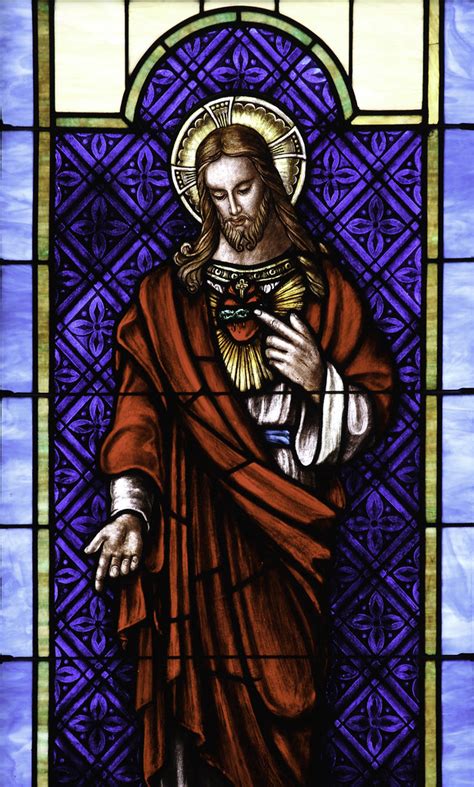
Marriage is hard work. When spouses complain about each other and one of them feels that he or she is putting all the effort into the marriage, it is because couples forget that marriage is also team work. Today such an experience is the norm. “I know what is right” and “I am sure that I am right”. Our knowledge-based society is marked by such a high degree of self-confidence that team work becomes almost impossible. Why? Not only do I know what is right, I am always right. Those of you who are married for a long time, you know that kind of losing proposition. You can never win and conversations stop even before they are started. The trend in more affluent families is that once the children are old enough, couples whose lives are already highly individualised, will go their separate ways. If they do not divorce, then they live solitarily lives with not much connexion to each other.
What is marriage supposed to be? It is fascinating that there are no marriages in heaven. Christ Himself pointed that out in Mt 22:23ff when He was asked the question of whose wife will a woman be at the Resurrection if she had married all seven brothers who died soon after each wedding. None of the brothers was the answer provided by Jesus for at the Resurrection we are not given to marriage.
And yet, there is an important detail found in the Book of the Apocalypse. There described in Revelation 19: 7. “Let us be glad and joyful and give praise to God, because this is the time for the marriage of the Lamb. His bride is ready, and she has been able to dress herself in dazzling white linen, because her linen is made of the good deeds of the saints”.
Marriage is precisely a Sacrament because here on earth, it is a symbol of the nuptial union between Christ, the Bridegroom and the Church, His Bride. Recently, Harrison Butker, an American Footballer, a 3-time Champion Kicker gave a commencement speech in a Catholic College. He is now getting lambasted for his view. Interestingly, he is only 28 years old. He said something rather relevant to the topic we have for today. If you are interested in the whole speech, go to National Catholic Register and type in Harrison Butker’s speech. What struck me, of all the challenging topics he raised, was an unacknowledged truth. The context of this particular point he had raised was when he spoke of his wife. He said this. “She is a primary educator to our children. She is the one who ensures I never let football or my business become a distraction from that of a husband and father. She is the person that knows me best at my core, and it is through our marriage that, Lord willing, we will both attain salvation”.
Insyallah, through our marriage, we will both attain salvation.
How many people do you think stand in front of the altar and think this of their vocation. I am not referring to a priestly or a religious vocation. Rather, I am referring to the marital vocation, that is, the call to be married. Here, the vocation, the calling is our means of salvation. I enter marriage so that I can be saved. I would be brave to think that standing right before the priest during the exchange of vows, couples would be thinking, “I forgot to send the invitation to that Uncle or Aunty”. Or, “Chiaklat, the flowers we paid for look like dead”, etc. Anything can be a running commentary in your head except this, “She or he is going to be my road to salvation”.
Marriage saves. You look at me… maybe you try to steal a look at your spouse, “You must be kidding me, right?”. Nevertheless, it is true. As a Sacrament, it is pointing towards to the perennial truth of Christ’s relationship with the Church. Christ loves the Church so much that He died. He sacrificed His life so that the Church, the Bride might live.
This is the model for the discipleship of marriage. Most of the time when we hear the reading of St Paul to the Ephesians where wives are told to obey their husbands, many men stop there without realising that husbands are supposed to sacrifice themselves for the wives.
There is a mutuality of self-oblation or self-offering when one obeys and one sacrifices. I used to say this during a wedding homily. “You want your wife to obey you in everything, give her your credit card with no limit”. Couples laughed but demanding obedience has never been a one-way street.
Finally, the vocation of a Christian marriage, where husband and wife give of themselves to the relationship, is a means of salvation. Marriage is not merely a remedy for concupiscence meaning that theologians used to explain that marriage is a cure for those who cannot stand to be alone. It is not just a cure but truly it is a path to salvation. The goal of marriage is heaven and the pilgrimage there is through the family where the relationship between husband and wife flourishes in the soil of authentic and fruitful love. Marriage is not only the instrument of salvation for the couple but also for the whole of society. Husband, love your wife. Wife, love your husband. Upon your love for each other rest the future of the family, the bedrock of society and the foundation of civilisation. There may not be any marriage in heaven and yet the road there is paved with good marriages.
Sacred Heart Triduum Day 1 4th June 2024
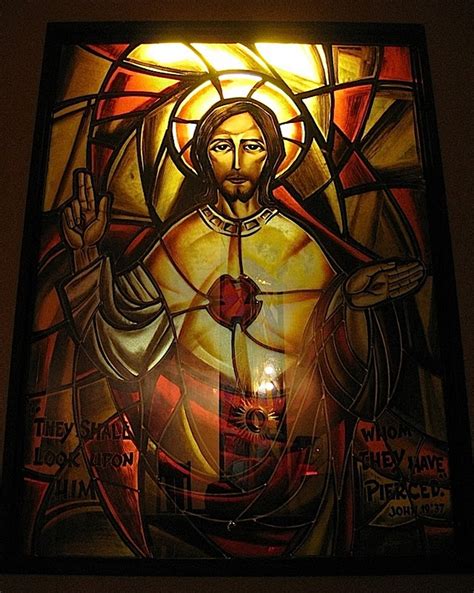
But the word Kingdom is basically social. The first sense of its “social” setting is the familiar “Pater noster”. The prayer is addressed to “our” Father and not just “my” Father. This “social” sense is confirmed in Matthew 25. At the end of time, the flock will be gathered and there will be judgement. The King is not really the “monos-arkhein”, the monarchy. Instead, the King is revealed to be “society”. Who is the King and when have we met Him? For as long as you shelter the poor, give food to the hungry, quench the thirsty, clothe the naked, visit the prisoner. As long as you perform these actions to “the least of my brothers and sisters, you do it to me”.
The Kingdom that Christ has come to establish is societal in its expression. It requires that society recognises His sovereignty by resembling what His rule stands for. Thus, the building blocks of the kingdom has to be more than mere individuals. Even the word “individual” cannot stand alone because it is a relational term. No one is an individual without the context of the other. The foundation of society is the individual but rather the family and in our case, the basis for the Kingdom is the Christian family.
We are focusing on the Christian family in the context of the Sacred Heart of Jesus because it is our feast day. There is an act which has fallen out of use but it is related to the family. It is the act of consecration of the family to the Sacred Heart of Jesus.
St John Paul II in his apostolic exhortation Familiaris Consortio (1981) remarked that every person learns what it is to be loved and to love, in the bosom of the family. Family life is crucial to our social development. The Catechism calls the family “the original cell of social life” (CCC2207). Within the family, the foundations are laid for a person to be who he or she is meant to be both through the love of God and of neighbour, that is, the family. Our closest neighbours are our parents and our siblings.
The family plays such a central role in the health of any civilisation. When Malays encounter bad behaviour, what do they say? “Kurang ajar”. The Teochew refers to the family—boh kah si (meiyou jia jiao). Therefore to create a civilisation of love we need to appreciate the truth about man, the truth about the family and only then can we know the truth about society. Without these interrelated truths, "civilisation" can become a merely superficial term which describes an ordered or developed society, where people are polite to one another. We can be polite to one another but that is not necessarily a civilisation. Look at our country. Malays can exist on their own and they do not need us. Chinese can also exist on their own. The indigenous East Malaysians can be happy without us. And we polite to each other but the question is this: is that nationhood?
The core of our being is relational which in our case means that fundamentally man must stand in relation to God. Without God, man will be left adrift because God cannot be replaced by the state or even by himself. As long as God is absent, we will not be able to be who we truly are, the Imago Dei, that is, the image of God.
Man as an image of God is called to responsible and personal collaboration with creation for his good and the good of all. No man is an island. We are called to community which brings us to the basic community, the human family. According to the Pope, "Human fatherhood and motherhood contain in an essential and unique way a ‘likeness’ to God which is the basis of the family as a community of human life, as a community of persons united in love".
The family brings us directly into the heart of the Mystery of the Blessed Trinity. As a Trinity of Persons, the inner life of God becomes a model for the family. As God the Father loves God the Son in a mutuality of “I” and “thou” or “you”, so too the relationship of a man and a woman in marriage. The mutuality between husband and wife opens itself out to life through the procreation of children. Therefore the establishment of the human family is founded the truth of who we are as persons created in the image and likeness of the Trinitarian God.
This makes sense of the Act of Consecration of the Family to the Sacred Heart of Jesus. He commands us to do it because He had revealed the Trinitarian inner life of love. We are invited to live that love. The way to do it is to shape ourselves into that love by consecrating the family to the love revealed in the Heart of Christ.
The family is the means to deepen our love of God and neighbour. To welcome the presence of the Heart of Jesus, is to draw from Him the true love that our families need to craft a civilisation of love. According to Pope Pius XII, the consecration to the Sacred Heart of Jesus is our way of building up the Kingdom. May the love of Jesus Christ of which His Heart is the fountain, take possession of our private and public life so that He may reign over society and home life through His law of love.
Subscribe to:
Posts (Atom)
