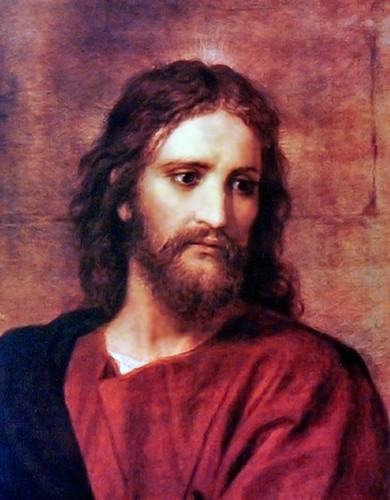
Sunday, 12 August 2012

19th Sunday in Ordinary Time Year B

Last Sunday, I spoke on the necessity of knowing who Jesus Christ is and not just focusing solely on what Jesus Christ means to us.1 If we lose sight of who He really is—the Son of God—then we may be reduced to running after the God of our making or our meaning; a constant drive to reshape Him according to our measure and our fancy. The imperative, to know who Jesus Christ is, is a necessity because He who is Truth makes a demand on us—a demand which is moral and so prevents us from slipping into a solipsistic existence. At the same time his moral demand reminds us that Man’s existence cannot be organised narrowly along an egocentric principle2. Christ feeding the crowd tells us something about the nature of the multitude. The multitude is not extraneous to our existential condition but is sine qua non for the very possibility that we are individuals.3 An individual who has lost his mooring to the multitude will be cast upon the sea of meaninglessness constantly fishing for meaning.4
Knowing Who He is will ultimately lead to self-discovery5 and at the same time, will enable us to encounter others—they mirror Christ’s image too. The implication for Christians of knowing who Christ is is that we are forced to look closely at His constituted Body, namely, the divinely instituted Church. These few weeks where Christ gives Himself as the Bread of eternal life has led us to take a look at His Body, the Church, the universal sacrament of salvation.
It is not an easy task to look at the Church. Why is that so? We find our answer in the example of Elijah in the 1st Reading: Despair. I wager that like him, humanity is caught in the throes of dark despair. The nation is mired in depression and also in denial. So too Christians and in particular Catholics. Every human institution has failed us and in many ways, spectacularly. Each encounter with failure of an institution weakens the anchor of our trust in the collective whole. When institutional failure is also encountered in the Church, the effect is even more devastating. Many an unsteady faith is shaken by the glaring weakness of an institution that claims herself to be divinely instituted. This is because many do not make the distinction between, on the hand, the Church which, according to Lumen gentium, Christ had given as the universal instrument of salvation for multitude and on the other hand, the people, weak and sinful, who make up the Church. The Church as the universal sacrament of salvation is a powerful statement which many pluralist Catholic theologians struggle to accept. In an age of inclusivism and tolerance, how dare we claim that Jesus Christ saves Buddhists or Muslims? With Catholic theologians even doubting the universality of Christ’s salvation through the Church, our collective despair is compounded even more. Who can really save us? Not even Christ can.
Let me illustrate how far deep despair has eaten into our psyche?
We are told that the national crime rate has fallen. This is presently the boast of the government that it is fulfilling its promises.6 But, my concern is neither the fallen crime rate nor the fulfilment of a morally bankrupt government. My attention is directed to a blessing formulated for a victim of crime and oppression. It goes like this:
Lord God, your own Son was delivered into the hands of the wicked, yet he prayed for his persecutors and overcame hatred with the blood of the cross. Relieve the suffering of N.; grant him/her peace of mind and a renewed faith in your protection and care.
Imagine the instilled fear gathered from the myriad pictured emails of victims of crime. In a time of trauma, the furthest from our collective minds would be two abilities. Firstly, the belief in God’s providential protection. Closer to reality would be the question like “Where were you God when I was being robbed or stabbed”? Secondly, the desire to forgive would be non-existent. Instead of praying to forgive, a victim might wish that the two snatch thieves meet with an accident not life-threatening but render them totally incapacitated.
Why the lack of belief and why the inability to forgive? Our incapacities show us how myopic our horizon of the divine is. We do not really believe the divine anymore let alone fathom His providence. When belief in God fails, what happens is that existential despair will set in.
But consider this: no horizon beyond the temporal implies that we are forever stuck in this world with all scores to be settled before we die. Then Holy Communion might just as well be no more than merely bread. The Holy Communion we receive would be what the Filipinos call, borrowing from their Spanish heritage, “consuelo de bobo”. [Consolation of the stupid]. Nothing more than a pacifier you plug into a baby’s mouth to shut it. Ultimately, Holy Communion is meaningless.
However, the first reading tells us more. Elijah may have been given mere bread, but it kept him alive. In Christ and through His Church, we are promised not mere bread but the Bread of Eternal Life to keep our faith in God. And here, we must make the connexion between Whom we receive and who the Church really is because in many discussions of the topic of the Bread of Life we often forget a very important condition for the possibility of the Bread given to us: Holy Mother the Church.7 As instrument, the Church, by means of the gifts given to her by Christ, her doctrine, laws, and sacraments, makes communion with God possible.8 The Church as the sacrament of Christ makes His work of salvation visible and accessible to human beings.

In conclusion, an involvement with Church, through our apostolates, is not a favour to the Church. Once, when asked to attend a catechetical formation, I heard a Sunday school teacher express this sentiment, “I am already teaching catechism. What more does the parish want from me?” In our local Church context, attending BEC is not an extra-curricular activity. And even our Sunday collection is not an act of generosity. What we do for the Church is constitutive of who we are because it is from her we are fed the sacraments of Christ. Thus, the 2nd Reading makes so much sense. St Paul speaks of imitating Christ and that by being kind and compassionate to each other. We reform our lives, little by little and day by day, so that we do not become a sully to the good name of the Holy Church and in doing so become an effective part of Christ’s mission in the world.
1 It was not preached at any Mass. Written just for the blog.2 In the context of Christ feeding the multitude, the prevalence of world hunger in such a pervasive manner is symptomatic of how egocentric the world has become. We have food more than enough to eat. The point here is not about the sufficient quantity and therefore about the improvement our distribution or cutting our wastage so that there will be enough for simply living. The point is about our “attitude” which is patently self-centred. The irony of an egocentric world is that whilst it purports to compose the individual or to make the individual whole, the effect has actually led to his disintegration. Much of our preoccupation with being whole—cosmetic weight loss programmes or cosmetic augmentations, self-help techniques—has not led to greater happiness. Chasing the self for oneself exclusively can only lead to existential loneliness. This brings us to really ask how we can be whole—through the multitude. Caring, sharing and giving make us whole.3 A good example of the necessity of the multitude for the individual is expressed by someone who says “I don’t need anyone”. A person who does not need anyone is, in effect, condemned to silence. To give voice to the statement “I don’t need anyone” is to commit a performative contradiction because the speech contradicts the intent. Just saying I do not need anyone is already saying it to someone, thereby nullifying the intent that no one is needed.4 Knowing as an act is always directed to the Truth. To know is to know the Truth. In that sense, meaning is derived from the Truth and not the other way round. Meaning does not always arrive at the Truth. For example, an expression from a popular tune, “If loving you is wrong, then I don’t want to be right”. I was just thinking of this as I was driving and the radio played the song: “Help me make it through the night” by Kris Kristoffersen. The lyric is not explicit but you get the gist. I don't care what's right or wrong, I don't try to understand. Let the devil take tomorrow. Lord, tonight I need a friend. A good context for such lyrics’ expression is an adulterous relationship. Clearly, for someone in an adulterous relationship, even though it is wrong, it is meaningful. Thus, what is meaningful does not always express the Truth unless one defines meaning as embracing also the bad or the wrong. Listen to the song by Debbie Boone “You light up my life”. She says “It can’t be wrong when it feels so right”. Is that not how youths today reason? For many of us, the good or what is right are functions of our feelings.5 The Word was made flesh. The event describes that Christ came to be one of us. As an event it bears the hallmark temporality. It took place in time. But, creation was made through Him and was therefore made in His image and likeness. It is by contemplating Him that we discover who we are. We should model Him and not the other way around.6 Never mind that governance by its very definition means that the country is under the rule of law. The audacity to claim that crime rate has fallen is thoroughly an embarrassment. The fact is crime rate in a functioning democracy should always be low!!7 The wording of the Orates fratres is changed only by one word: Holy. The small change makes a world of a difference in our perception and appreciation of who the Church is: the ever Holy Bride of Christ our Lord.8 Therefore she is not just “structure” divided between “hierarchy” (therefore oppressor) and “laity” (therefore oppressed). She is also mission, sacraments and prayer. According to Pope Benedict, “Too many have become obsessed with changing church structures, patterns of ministry and the like, so that Church itself becomes of secondary importance. Ecclesiology becomes bogged down in a “battle about machinery”. The “real problem”, however, is the “crisis of faith”. The problem is not between hierarchy and laity. The problem arises when many, Bishops, priests and theologians, seeks to turn away from the Church’s theological attributes towards its political ones, whereby sociological theory dictates ecclesial organisation and the sacramental principle is replaced by ‘democratic control’. The Church is ontologically sacramental in nature and onlyconsequently hierarchical. Therefore, the hierarchy’s function is to serve the ontological nature of the Church. Forgetting this, we will be side-tracked to squabble about how the Church is to be organised or ignoring this, we will be tempted to focus merely on “mission”.

Sunday, 5 August 2012

18th Sunday in Ordinary Time Year B


Last week, the suggested military motif in the Gospel gave us a chance to reflect on what it meant for the Church on earth to be classified as “militant”. Whilst the word “militant” might sound politically incorrect, we explored the idea of militancy in the context of Christ’s mission and the conclusion we drew was that the term Church Militant aptly described Christians in the world, for we have been and still are engaged in the crucial struggles of our time, a struggle characterised by Evil attempting to distract Man’s search for Him Who is Truth, Beauty and Good.
This Sunday’s Gospel reveals an on-going demand for nutrition that the crowd had of Christ. Away from their military ambition for Christ, the people on seeing what Jesus could do, would not let up in their pursuit, if not to make Him King, as least, to be someone who could on a whim conjure up a feast to satisfy the pangs of hunger. This subsistent demand on Christ brings us face to face with the question of who Jesus Christ really is. How do we perceive Him and what are the implications of our perception.
Firstly, our perception of reality is perhaps much more complicated simply because we are no longer at “home” with reality. Prior to the advent of modernity, Western Philosophy simply accepted that the mind could know reality as it is. In other words, physics [ie, science] and metaphysics [ie religion and that which cannot be proven scientifically] co-existed. But, the advent of modernity made the process of knowing more complicated meaning that what cannot be proven scientifically, for example, religious, was relegated to the personal, the superstitious and the unknowable. Even in the area of science’s expertise a thing could be “known” via our theories, hypotheses or models. Or, a thing we knew could also be merely our sense impressions, according to Hume and causality was explained as a connexion of what we have been accustomed to seeing of events flowing from to another. The complication brought about by modernity was located within the process of knowing. Thus, instead of knowing a thing in itself, we began a transforming migration towards what a thing could mean for us. It was an inevitable shift and in summary, because we could no longer know the thing in itself, we began to understand reality in its relation to us. Galileo did not just inaugurate the shift from geocentricism to heliocentricism, Descartes also initiated the paradigm shift from our focus on the object to the preoccupation with the subject. Thus, the question of who Jesus Christ was (objectively), had become the question of who Jesus Christ was to us (subjectively).
This shift was quite utilitarian in its expression, much like the crowds’ intent for Jesus. But, the truth is, we are by and large utilitarian and therefore meaning does play a great emphasis in the way we understand reality. And today the crowd in the Gospel is led to understand who Jesus is rather than what Jesus can do for them.1
Like the crowd, we are challenged to rethink that meaning is not the ultimate focus of life. For if it were, then we need to explain why a world organised along the line of meaningful existence has left trail of “empty” destruction. In the face of a formidable might to create meaning, why are we still so empty and shallow? Meaning must draw its reference not only from us but from reality itself.
Today the reality that confronts us is Jesus Christ. In the multiplication of the loaves and fish, our attention is directed not only to the nutrition we consume but to the Real Presence of Jesus Christ in the Eucharist we celebrate. The transubstantiation is only possible, not by science but by His power as God. Is He really God or do we just consider Him meaningful in our lives? Let me clarify that Who He is and what He means are not mutually exclusive but, sadly, the prevailing wisdom about Jesus Christ is that He can be anything except God. He scores better as a superstar. He teaches better as a guru. He saves better as a liberator. In all things, He is no better than an exemplar, the best of all human beings, the most capable of all teachers and perhaps the most competent deliverer.
The man who fed the crowd is God, no less. Acknowledging Who He is has life-changing implications. We cling to Him not only because He is meaningful but because He is life. Make no mistake that the world is not saved by meaning. The “meaningful” lives of many rich and famous and many of us are nothing but vacuous and that hollow which we want fill with adventures and fun and consumption can only be filled and satisfied by the truth who is Jesus Christ. Ultimately, who Jesus is will lead to what Jesus can do for us and how much He means to us. What begins with every human search for meaning must lead to a search for God Himself. On His part, He answers our search giving us what truly will satisfy: the Bread of Life, the Bread of Eternal Life.
FOOTNOTE:   
1 Meaning is a crucial component in our interaction with reality. In fact, modernity, by and large, is organised according to this one simple principle that whatever we encounter, it has to be meaningful. And meaning is often reduced to merely the palpable surge of elation we feel. A good example of how much meaning is central to our experience is the abhorrence for rituals as repetitive and therefore meaningless. Youths often lament how meaningless Mass is to them because they do not experience any palpable pleasing sensation that Catholic rituals as such do not evoke. On another matter, Catholic rituals have become “dead” and therefore unable to reach out to us because we have subjected rituals to the dictates of the “mind”—that they have to be understood in order to be meaningful. It is an emasculation of the power of rituals to give meaning.

Sunday, 29 July 2012

17th Sunday in Ordinary Time Year B


The next few Sunday Masses, we shall have the company of John for our Gospel. This Sunday, we kick it off with a miracle stunning in scale and stupendous in scope. John’s Gospel does not have what we traditionally call the Institution Narrative. Instead, its place is taken by the Washing of Feet ritualised annually in our Maundy Thursday liturgy. What we would consider in John to be Eucharistic in motif is supplied through chapter 6 of his Gospel. All 4 Gospels record the miracle of the loaves and fish but only John sets his in the context of the Passover. Thus, the link to the Institution Narrative of the other 3 Gospels may be gleaned through the actions of Jesus who took bread and gave thanks before distributing it to those sitting down. The vocabulary is strongly evocative of the Last Supper.
What lessons may we draw from this feeding feast? Firstly, we are given a definitive figure of 5000 men which can also mean, depending on how you estimate the average size of a family, between 10 and 20 thousand who were satiated if women and children were included. This was a miracle of God’s generosity. Hence, the first lesson is we are invited to trust Him. Secondly, the 12 basketful remaining not only attest to God’s abundant generosity but they also challenge us to become more aware of the reality of physical hunger. The continued presence of hunger in the world is not an indictment against God’s providence but rather a conviction of our selfishness. The second lesson is we are asked to be as generous as God is.
Thirdly, and this is the lesson which I want to highlight today. The exact figure 5000 opens up another horizon for a reflexion of grave importance for the future of Christianity and also of humanity.
In a lunch meeting between the Pope and some cardinals, he used a description for the Church on earth, which admittedly sounded out of fashion. The Church on earth is aptly called “Ecclesia militans” meaning Church militant. In times Roman, here I mean not the word processor typeface or font, a legion consisted of, give or take, 5000 fighting men. Today, Jesus feeding 5000 men merits a second look at what this figure of 5000 really stands for each one of us.
First of all, it is an uncomfortable comparison to think the 5000 men Jesus fed could be considered a Roman legion. Jesus Himself was uneasy with the idea. He escaped into the hills because they wanted Him to be a leader of an earthly kind. Why a disquiet with a martial imagery of Christ? Since humanity has witnessed two great wars in the last century, and countless genocide in between and after, the latest being the civil unrest in Syria, a pertinent question to ask is if humanity needs to have such an aggressive reminder? After all, the face of militancy is also worn, amongst others, by suicide bombers and so, a term like Church militant, is suggestive of a Catholic crusade or a Catholic wing of the Hezbollah. I would think that many of us would have preferred a more peaceful, and in an era more tolerant, a less belligerent term to describe the Church. In the face of massive institutional failure, of governments, not only here but in many countries, of financial bodies like the UK banks fixing the Libor rates, should we not democratise the institution of the Church and thus prevent or pre-empt any hierarchical abuse of power? There is a movement called “We are Church” which advocates a democratic and a more egalitarian form of Church by dissolving the distinction between hierarchy and laity. Such a scheme is surely seductive as it suggests of common ownership and thus equal responsibility for the management of Church.
The Pope would think otherwise. An attempt to humanise the Church, to level the ground and to make it mirror more our social set up can only impair its divine mission. We are “Ecclesia militans1 not because we are strident, not because we want to fight but because we are engaged in the crucial struggles of our times. Evil, and by evil, I do not mean Hollywood’s grotesque portrayal with great cinematic effect. Instead, the evil that wishes to dominate the world, in its many forms, is subtly masked as goodness, beauty and truth. Caught unawares Christians will be tossed in the swirling pool of relativism where choice itself becomes the good, where novelty usurps beauty and where subjective experience displaces truth. The authentic exercise of freedom is specifically directed towards the search for what is good, beautiful and true; which is none other than the human search for Jesus Christ, who is Truth, Beauty and Goodness incarnate.2 It is a demanding exercise which is humanly impossible and therefore in need of divine help.
Christ by His life, death and resurrection has prevailed against the Evil one. He may have won for us eternal life but still, we need to choose. Thus, the exercise of freedom means that battle for the heart and soul of humanity continues. Today that battle rages under the dictatorship of relativism, a tyranny which does not recognise anything as definitive except one’s ego and one’s desires. The future of Christianity is dependent on Christian soldiers continuing the mission of their Lord and Master in drawing humanity to Himself. It is in this endeavour that the miracle today becomes relevant as it challenges whatever philosophy of life we cling to. The term ecclesia militans does not make sense if one’s philosophy were “I live to eat”. Our society has enough disposable income to easily slip into this kind of philosophy of life. But, if your philosophy were “I eat to live”, then the term makes sense. Why? We need food and therefore strength for the good fight.
It is in relation to this good fight, so aptly described by St Paul, that the familiar word sacrament may be applied to John’s Gospel. Why? The explanation lies in the event which we call the Incarnation because the Incarnation is the sacrament par excellence. As such, the Eucharist was called the “medicine of immortality” by St Ignatius of Antioch. Why? Note that in chapter 6 of the Gospel, the people who had eaten the manna in the desert died. The same fate would meet the 5000 who ate the very bread that Jesus multiplied. It is only at Mass, the Eucharist which is not only a token but is indeed made possible by the Incarnation, that we can eat the Bread of Eternal Life to draw the supernatural strength needed so that we, as soldiers of Christ, as Ecclesia militans, may continue the good fight in order that we may merit a life that is eternal.
FOOTNOTES:
1 For the Pope, the Church is a communion (koinonia) founded on the Eucharist which is at once vertical with God in Christ and horizontal, amongst believers themselves. The Church’s “permanent structure is not democratic, but sacramental, consequently hierarchical” since each particular Church is presided over by a Bishop who maintains its unity with the Bishop of Rome and thus with the universal Church.
2 In the Catholic tradition, beauty is a metaphysical and ultimately theological notion. The search of beauty has nothing to do with mere aesthetic sensibility or a flight from reason, because, from the divine perspective, beauty, together with truth and goodness, is a manifestation of being. God, the origin and sustainer of all being is truth, beauty and goodness itself. In the language of metaphysics, truth, beauty and goodness are the “transcendentals.” In other words, to the degree that any reality participates in being and ultimately in the being of God, that reality is true, beautiful and good.


Sunday, 15 January 2012

2nd Sunday in Ordinary Time Year B


We move into Ordinary Time and very immediately the focus is on vocation or call and response. In the first reading, we get a glimpse of the vocation of the prophet Samuel. The Gospel gives detailed descriptions of both the call and response of the first apostles.
What does it mean to be called and how are we to respond?
Calling is not something which happens out of the blue. In fact, creation may be said to be a response to God’s calling. He called and all reality, visible and invisible, came to be. That could be considered the most basic response to God’s calling. However, creation, especially Man, the pinnacle of God’s creation, is imbued with freedom. With freedom, morality maps Man’s freedom to respond to God or not.
Today, it would be good to reflect on how we can sometimes unknowingly reject God and maybe understand what it means to respond.
Let us begin with a phenomenon known as lapsed Catholics. I am sure you would have come across people who are classified as non-practising. It is by no means a phenomenon restricted to Catholicism. All religions have their fair share of it. I once had a conversation with a lapsed Catholic and the reason given for being lapsed was that she was disgusted with how poorly people lived their faith.
Disgust may be a strong word. Perhaps discouragement would be a better description.
For example, each year we attract about 100 people for RCIA and give or take the falling out, we might baptise about 80. Statistically, this parish may have the most baptisms in the Archdiocese every year and it is a fact that might just swell us with pride.
The call to discipleship frequently has a kind of trajectory that starts off with euphoria. But, when the euphoria dies down, then the mundane reality of Catholic life sets in. This is the time when the neophyte will encounter real Catholics in whom they will observe a huge gap between what is preached and what is practised. The result may be a faith-shattering dejection and soon enough a cause for staying away from the Church. But this phenomenon is not restricted to neophytes because many cradle Catholics do the same when they cannot reconcile the difference between preaching and practising.
Thus far, I have described a reason for arriving at lapsed Catholicism. To be fair, the reason is not illogical. In Confession, we examine our conscience and ask if we have caused a scandal by our actions or omissions. The etymology of the word scandal is an obstacle meaning that by our action or inaction we have caused people to stumble in their faith. An example of stumbling in faith is what you may have heard uttered ad nauseam—the Church is full of hypocrites.
But, many people also do not realise that the reason for lapsing is really a sorry excuse for the abdication of responsibility. What they are saying is that they will be Catholics only if others behave. Perhaps, in the context of God’s call and our response, let me rephrase the phenomenon of lapsing as, “Hey God I don’t like you and I don’t want to be your friend. Why? Because these people are bastards”. Crude as it may sound but it gets the point across. What sort of response is that?
The call that God has for us, is a call that is personal to us. Everyone is personally called into relationship with Christ the Son. Through the Sacrament of Baptism each one is grafted onto the Vine, called Jesus Christ, Our Lord and God. By our baptism, our response to Him is lived out both personally and corporately. Personally because only the individual can respond and corporately, because we realise that nobody can, on his own, graft himself to the Vine. No one baptises himself. It always happens through the agency of another which makes the grafting process corporate in its nature. The nature of God’s call which is corporate is otherwise known as Church. Church is not something extraneous to calling but it is essentially a component of that call and also necessary for salvation. This is where we differ from Protestants because for them, personal faith is often restricted to an “individual’s” response. For Catholics, our personal response has a corporate structure because salvation comes through the Church. It is through her that Christ’s sacraments come to us. We cannot accept the head who is Christ and reject His Body which is the Church.
This corporate nature of God’s call makes possible the baptism of children because the faith of the parents may supply for the child’s lack of faculty in making personal decision. Parents have a grave duty to form the child to become responsible personally for the faith which they first received from their parents. In a wider circle, it means also that we need to have a greater sense of responsibility to nurture each other’s faith because by our behaviour we may encourage or discourage our brothers and sisters.
Having said all that, it still remains that our response to God is personal. The Sacrament of Confirmation is at times described as the moment when the faith of our parents becomes our personal response. Some of our youths seem to graduate from Sunday School and Confirmation to non-practice. It explains but does not excuse an inability to take personal responsibility for one’s response to God. To a certain extent, part of the blame will lie on the parents IF they did not in the first place train the child for that moment of responsibility. But, the failure to be personally responsible cannot be derived from the corporate expression of God’s call, meaning that one cannot blame one’s parents or others forever. You may blame someone sometime but not all the time because after blame comes personal responsibility for a situation, no matter how dire.
In summary, faith is a personal response to God but always lived corporately through the Church. Maybe, at the beginning of the year, when resolutions are baking out of the oven fresh and aplenty, we might resolve to deepen our response to God, that is, to live our faith personally and independently of other people’s practice or lack of, but always within the bosom of Holy Mother, the Church.

Friday, 6 January 2012

Epiphany Year B


Let me begin by defining what the Epiphany is. It is the Solemnity of the manifestation of Christ to the Gentiles or put it in another way, it is the unveiling of the Christ to a world longing for its Saviour. Thus, the readings speak of God’s revelation to the Jews through Sacred Scriptures whereas the Gentiles will discover God through nature. The Jews in exile are encouraged by the Prophet Isaiah with a vision of a Jerusalem restored; a prophecy which is fulfilled by Christ and in the New Israel, the Church. The Three Wise Men were Gentiles and Matthew showed them as receiving God’s revelation through astrology. In revealing to both Jews and Gentiles, Epiphany is also an invitation to communion with Him and one another. In a nutshell, apart from salvation and worship, the Epiphany is a call to communion.
Epiphany, in fostering communion, shares its intent with a phenomenon we all know as social-networking. Today, I would like to speak of what implications social-networking may have on Epiphany’s invitation to communion.
The ontological reason for the Epiphany is because the human person is made in the image and likeness of a Trinitarian God. What does that mean? Since we are made in His image and likeness, it means that we must be “worth God’s while” to manifest Himself to us. The corollary would mean that the organisation of our lives must reflect this God whose image we are moulded in. Otherwise why would God reveal Himself to us?
One of God’s attribute is holiness which again means that we are supposed to reflect holiness for without it, we are no better than an intelligent primate. Our quest to be is a quest for holiness for without it, we would become either individualists without a sense of “direction” or we are reduced to collective whole without a personal centre. Individualists of a senseless kind are those who live lonely self-destructive lives or a collective of an impersonal kind are those who live without any self-reflexion. We call this herd-mentality.
What has Face-book, a form of social networking to do with this? Firstly, let me make it clear that Face-book is amoral in the sense that in itself, it is a neutral[1]. Its morality is derived through our use of it. In itself, it is an excellent communication platform. But hidden within its use is a dark shadow because we are innocently drawn into hyper-sharing because we assume that we belong in communion. Well, that may be the case that we are already in communion but, the need for everyone to know what we do, where we are or where we go, could mask an invitation to the new temple of the Narcissist. It is a kind of individualism in full bloom.
The temptation to individualism grows stronger the more we experience fragmentation in our lives. In a fragmented world, the youths have only a vague sense of the whole without a sense that the whole is interconnected or to put in a familiar term, the whole is in communion.[2] For example, the drinking of water from bottles. We are not unaware of how much water is wasted when half-drunk bottles are discarded. It is ironical that the present generation is trying to save the sharks for a generation which does not appreciate how much plastic flows into the ocean. This is what I mean by living fragmented lives.[3]
Whilst the world outside continues to deteriorate, that is, gets more fragmented, fear drives us to seek refuge behind our gated communities or into the safe cocoon of what we can control. From the loneliness of our bubble, we try to reach the world through social-networking but instead of reaching the world, the world comes to watch us star in our movies.
Let me reiterate that face-booking is not bad in itself but social-networking even though it contains the word “social” is often narcissistic because it makes us forget who we are. We are made in the image and likeness of a God who is social in the truest sense of the word. Why? Because God is Trinity and therefore, God’s holiness is a holiness of communion. In the Epiphany, we are introduced to the fullness of the individuality and collectivity we yearn for because the true individual is always in communion—a communion which prevents us from selfish individualism; a communion which Sacred Scripture would describe as a cloud of witnesses or communion of saints or holiness.
Finally, we are challenged to ask if the Epiphany is really God’s universal revelation of Himself through Jesus His Son or have we succumbed to a narcissistic world where the phenomenon of social-networking makes Epiphany a manifestation of ourselves to God? In this narcissistic world, God comes to worship us. Thus, the relevance of the Epiphany may be lost to us especially when social-networking is really an avenue to an enclosed world where we have become the centre of attention. The revelation of God to the Gentile world reminds us otherwise. The world comes to worship the God who saves.  


[1] Just like gambling or alcohol in themselves.
[2] Facebook tempts us with pseudo-communion.
[3] Fragmented young people want a world outside which is peaceful so that they can grapple with the internal conflicts which to themselves seem intractable. They are unable to grasp a bigger picture.

Sunday, 1 January 2012

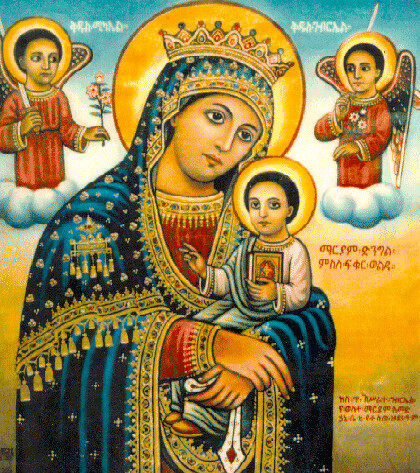
Solemnity of Mary Holy Mother of God Year B


1st Jan marks the Octave of Christmas. Today is 8 days after Christmas. Every liturgical year, the Church celebrates two Octaves: Christmas and Easter. In some countries, 1st Jan is also a Holy Day of Obligation. The Solemnity is important for the Church and until recently very important for the Society of Jesus. The official title is Solemnity of Mary, the Holy Mother of God. I said “recently” just now and so for the Society of Jesus, 1st Jan was important because it was, apart from it being the Solemnity of Mary, Holy Mother of God, also the Feast of the Giving of the Name of Jesus. Recently is as recent as 2002. With the latest edition of the Latin Missale Romanum  of 2002, a decoupling took place. Mary, Holy Mother of God remained the Solemnity we mark on 1st Jan whilst the Feast of Giving of the Name of Jesus has been shifted to 3rd Jan. But, even for so progressive a Society like the Jesuits, for the time being, we will still celebrate today as our Titular Feast but in time to come, when our liturgy catches up with the Calendar of the Universal Church[1], the Jesuit’s Titular Feast will be shifted to 3rd Jan. One of the reasons for shifting the Feast of the Giving of the Name of Jesus is because a Solemnity ranks above a Feast.
These are just some technical trivia so that you might ask why we should not celebrate the Giving of the Name of Jesus on 1st Jan, after all He is the Lord. Instead, the Church has given the honour to Our Lady. The next logical question would be: “Are we giving too much honour to Our Lady”?
The question as to why we should celebrate Mary, the Holy Mother of God, on 1st Jan lays bare a fear we may have that as Catholics we are idolaters. Putting aside the fear, let us attempt to uncover the foundation for why we give such great honour to Mary.
Not long after the event of the death and resurrection of Christ, even at the stage where the Gospels were being composed, there were already distortions about who Christ really was. There were already Gnostic tendencies within the community of St John. They did not believe that Christ had come in the flesh. How could He condescend to become human when flesh is “evil”? John’s Gospel was a response against these tendencies. By the use of the word “flesh”, John indicated that Jesus did not just take on a body as if He were putting on clothes. The Word was made “flesh” meant that Jesus was not some kind of appearance and nor was He some kind of a ghost. In fact, John’s Gospel was a detailed record of the facticity or concreteness of the event of the Incarnation. John 1—the Word became flesh; John 6—my flesh is real food and my blood is real drink; and finally, John 20ff—the post-Resurrection encounters of the Disciples with Jesus took place bodily, albeit a glorified body. “Put your finger here; look, here are my hands. Give me your hand; put it into my side”.
Furthermore, the Giving of the Name of Jesus coincides with the 8th Day—as detailed in the Gospel—the day on which Christ was circumcised. Here again, the circumcision is a reminder that Christ came in the flesh and that He did not merely appear in the flesh.
St Paul in the Letter to the Colossians made mention of this flesh: In His body lives the fullness of divinity (Col 2: 9). Here we are brought into the fullness of the mystery which we have been celebrating these last 8 days: Christ is True God and True Man and not 50% God and 50% Man. He is not like your Toyota Prius, a hybrid car that uses both fossil fuel and battery power. This mystery of the God-made-man is called the Incarnation. And to call Mary the Holy Mother of God is to make this mystery as real as it can be.
It is upon this mystery that the foundation for the whole theology of the Sacraments rests. The Sacraments are often considered a Catholic preoccupation but they are not. In fact, Pope St. Leo the Great used to say "Since the Lord is no longer visible among us, everything of Him that was visible has passed into the Sacraments". In effect, the Sacraments would not be possible without the event of the Incarnation. This follows from what John wrote of the Jesus whom he saw with his own eyes and touched with his own hands: The Word was made flesh, he lived among us, and we saw his glory (John 1:14).
Mary is called the Holy Mother of God only because Jesus is God. And this dogma declared in AD431 at the Council of Ephesus has salvific implications. Again we quote Pope St Leo the Great: “Henceforth, He is reckoned to be of the stock, not of His earthly father but of Christ, who became the Son of Man precisely that men could also be sons of God. For unless in humility He had come down to us, none of us by our own merits could ever go up to Him”.
 So, are we idolatrous in our relationship with Mary? Or do we give too much honour to Mary? Not at all. Mary, the Holy Mother of God is a statement of our salvation as it cuts through any attempt to fudge the question of the universal salvation of mankind. Let me read you the Preface III for Sunday, both from the old and new translation that you may appreciate how important the fullness Christ’s divinity and humanity is for salvation.
We see your infinite power in your loving plan of salvation. You came to our rescue by your power as God but you wanted us to be saved by one like us. Man refused your friendship but man himself was to restore it through Jesus Christ our Lord. (Old translation).
For we know it belongs to your boundless glory, that you came to the aid of mortality itself, with your divinity and even fashioned for us a remedy out of mortality itself, that the cause of our downfall might become the means of our salvation, through Christ our Lord. (New translation).
No Marian dogma is ever about Mary alone. So, right at the beginning of the year, in declaring Mary to be the Holy Mother of God, the Church unequivocally declares that Jesus the Lord is the Saviour of the world and through Jesus’ humanity, mankind is saved.


[1]Every religious congregation has a titular feast. It could be the Founder’s Feast Day. Since the official name for the Jesuits is the Society of Jesus, it makes sense that the titular feast should be the Feast of the Giving of the Holy Name of Jesus.

Sunday, 25 December 2011

Christmas Day Mass Year B


This is the final instalment of a four-part homily. In the 1st instalment, I spoke of salvation in terms of the "already and not yet". Christ already reigns through His Church but all the things of this world are not yet subjected to Him. Even if that may be the case, the Vigil Mass was considered joyful because we were anticipating the coming of Christ. We dared to celebrate because we acknowledged and trusted God’s providence. The focus of the 2nd instalment was on the "already" whilst we kept the "not yet" at bay. We broke into the midnight celebration of Christ’s birth. We lingered, marvelled and rejoiced at the birth of our salvation. In fact, the appropriate posture was silence before the manger of the helpless Child Jesus. Our reverential silence allowed the mystery of God made Man to emerge. The 3rd instalment explained the significance of the ox and the donkey in the imagination of the crib. They were there because Isaiah spoke of the draught animals as the ones who recognised their owner and their master’s crib.
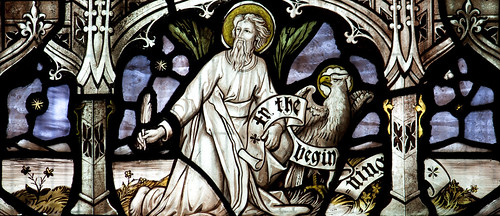
Let us continue in this final instalment to deepen our experience of recognising God our Lord. The Gospel Reading which consists of eighteen verses is taken from the Prologue of John. It is not an Infancy Narrative like those found in the Gospels of Matthew and Luke. The Prologue starts at the very beginning of time and Creation is presented as the framework for announcing the Incarnation. John makes a connexion between Genesis and his Gospel because he echoes the first verse of the Book of Genesis. “In the beginning was the Word”.  It is a profoundly beautiful poem that the custom from the early Church was for the priests of the Church to read it over sick people after anointing them and over newly baptised infants. John’s Prologue was written down and placed in lockets which the early Christians then would wear around their necks, especially in times of danger or when travelling.[1]
With the Prologue, the Mass of the Day is a profound reflexion on why we celebrate Christmas. It is not surprising that the symbol of John’s Gospel is an eagle because soaring above the celestial heights he looks from the vantage point of the mystery of God to illustrate how this same mystery penetrates the stable and enters the flesh and blood of man. “The Word became Flesh, and dwelt among us”. (John 1:14) In fact, the Credo which we will profess shortly will include the same words et verbum caro factum est and at about that time, we fall on our knees—much like the carol O Holy  Night—in humble acknowledgement that the mystery of the Word made flesh, this Divine condescension, this holy exchange between divinity and humanity, symbolised by the use of a drop of water at the Eucharist, is the only explanation we can give for why we can be saved. And so at the preparation of the wine, we say, “By the mystery of the water and wine, may we come to share His divinity as He humbled Himself to share our humanity”.
We are celebrating not just any birthday; not least of all a great man, a great guru or a great prophet. We are celebrating the birthday of our Divine Lord in time and according to Pope Benedict, “He came as a child in order to break down our pride. Perhaps we would have capitulated before power and wisdom, but He does not want our capitulation. He wants our love. He wants to free us from our pride and thus make us truly free”.
We, who come, are here to behold His glory, the glory that was His with the Father from before time. As we behold Him, as contemplate Him and as we gaze at Him, we truly see ourselves. So, before we leave the Church today, get close to the crib to stare in wonder and behold in amazement at the Son of God who came to be like us and pray that you may walk out like Him so that you may according to the first reading radiate and let His glory be manifest for all to see.
In summary, Christmas commemorates the dawn of our salvation. As we savour the mystery of the Incarnation, it is also a hopeful reminder of what we can be. Come, let us adore Him.


[1]You know the Taoist custom of writing on pieces of yellow paper (fu), folding it and placing it in a locket to be worn? We did that too. However, here I am make a distinction between an amulet and a sacramental. There is a thin line between magic and faith. An amulet is considered to contain power in itself whereas a sacramental works on the basis of faith.